Configure AI Budgets for WordPress Teams
Set SophMate monthly and per-user budget limits so AI usage stays predictable across administrators, editors, support staff, and agencies.
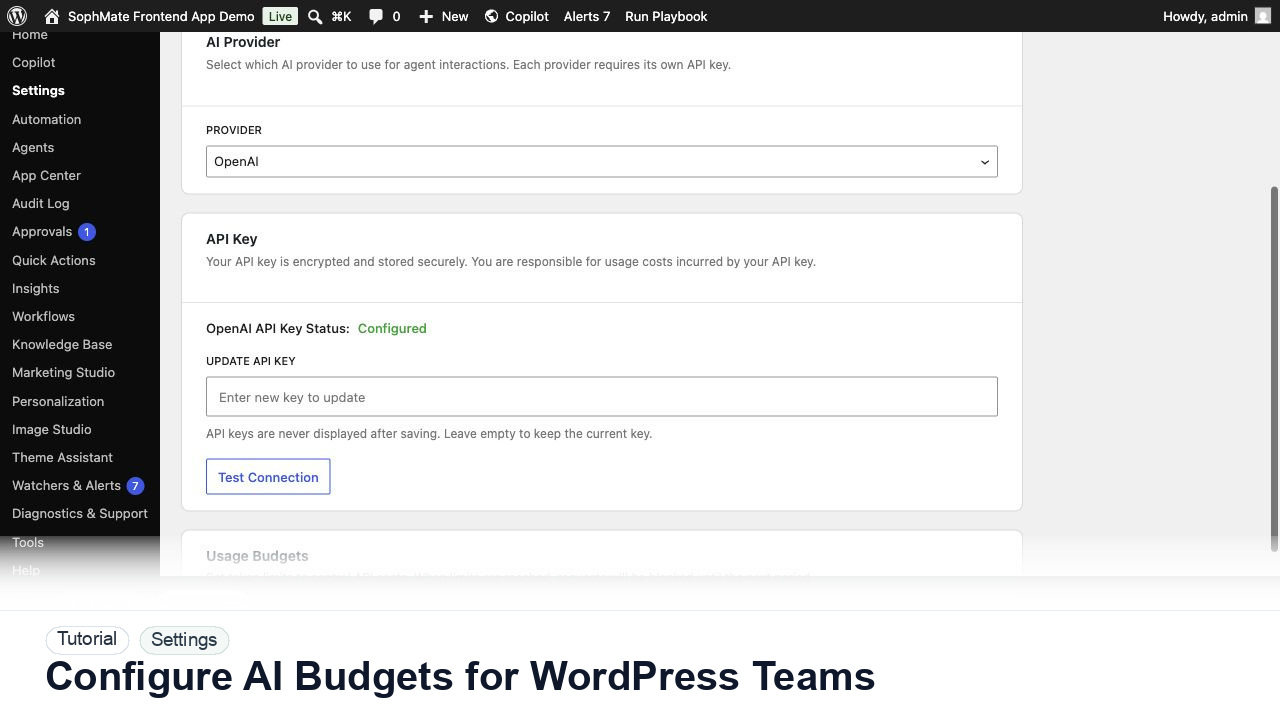
Set SophMate monthly and per-user budget limits so AI usage stays predictable across administrators, editors, support staff, and agencies.
By the end of this tutorial, you will know how to use SophMate for WordPress AI budget controls while keeping the work reviewable inside WordPress.
An agency is preparing a client store and wants editors to use Copilot without accidentally exhausting the site AI budget.
Use this tutorial to evaluate whether SophMate treats setup as an operational control. A buyer or agency lead should be able to verify provider ownership, budget limits, diagnostics, support routing, and rollout blockers before inviting the team.
Review these SophMate budget settings for a WordPress team rollout. Confirm site-wide cap, per-user caps, image usage, blocked-user behavior, approval owner, and first-week review plan.
The tutorial image focuses on the SophMate Settings area where budget caps, provider state, and hard-stop behavior are reviewed before team members begin using AI workflows.
Do not share provider keys in prompts, screenshots, or support requests. Use Diagnostics for status evidence and keep budget changes owned by an administrator.
Set a monthly site budget that reflects the client budget or internal trial limit. Treat this as a hard operational control, not a reminder.
Give administrators and operations leads more room than occasional editors. Daily caps help avoid one long prompt session consuming the entire monthly allowance.
Image Studio can consume budget differently from text chat. Confirm image generation caps before enabling brand and creative workflows.
Use settings and audit surfaces to find heavy users, blocked requests, and workflows that deserve higher limits. Raise limits intentionally instead of removing them.
Tell users who can approve a temporary increase, what evidence they should provide, and whether the work should move into a workflow or playbook.
The setup is working when users can complete normal Copilot or workflow tasks without exceeding limits, administrators can see budget behavior, and budget changes have a named owner.
If setup or budget behavior is wrong, pause team rollout, lower limits, rotate affected keys, and rerun diagnostics before enabling more users.
Document provider ownership, budget owner, connection-test result, diagnostics status, and who may change settings later.
A site administrator should own this setup and revisit it after provider, budget, hosting, or team-access changes.
Escalate when diagnostics continue to fail after provider, budget, and hosting checks are verified.
No. Raise caps only after reviewing real usage, blocked work, and approval ownership. Budget controls should remain an operating guardrail, not a temporary setup step.
No. SophMate should make the work easier to draft, inspect, approve, and repeat. Human review remains necessary when output affects customers, money, published content, privacy, settings, or workflow execution.
Record the owner, input scope, access boundary, approval point, failure modes tested, evidence location, monitoring window, and rollback or stop path.
Complete one provider test, one diagnostics pass, and one budget review before inviting the next user group into SophMate.
Next step
Review the SophMate listing for current package details, screenshots, compatibility notes, and license terms.
Related
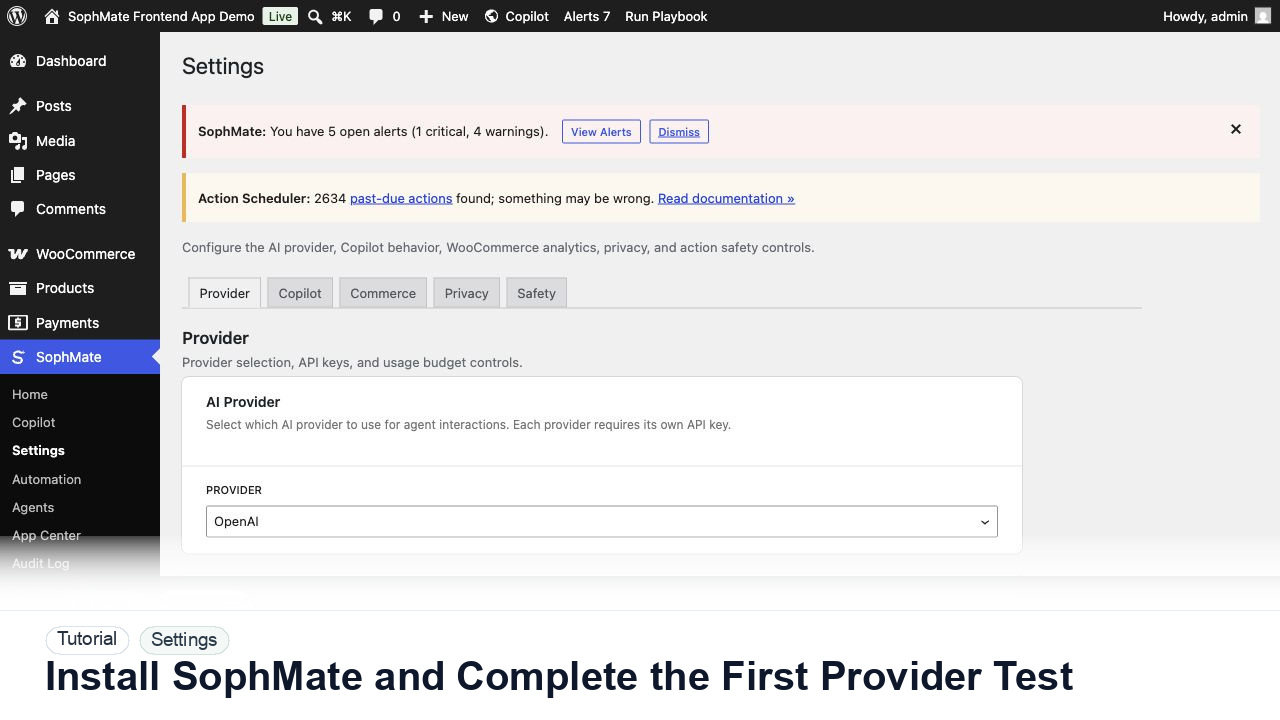
Install SophMate, add an OpenAI or Anthropic provider key, run the connection test, and confirm budgets before users begin AI-assisted work.
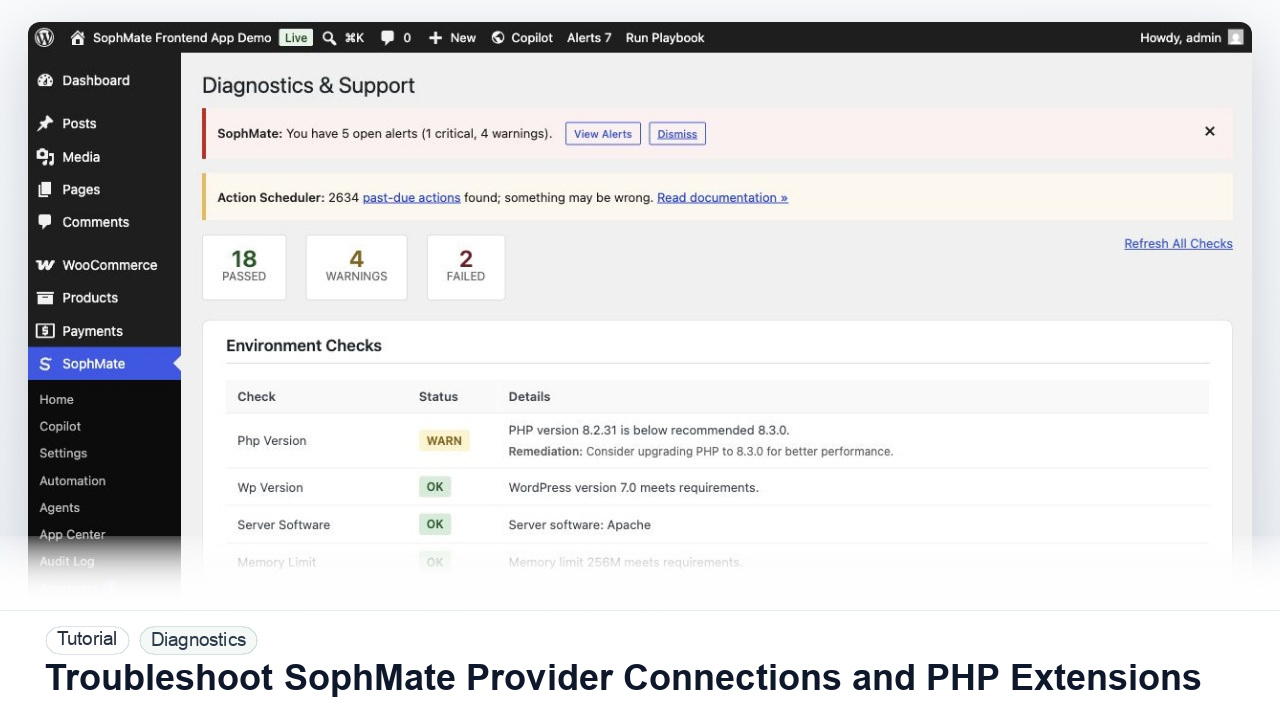
Diagnose failed provider tests, missing PHP extensions, outbound HTTPS problems, and environment warnings before users rely on SophMate workflows.
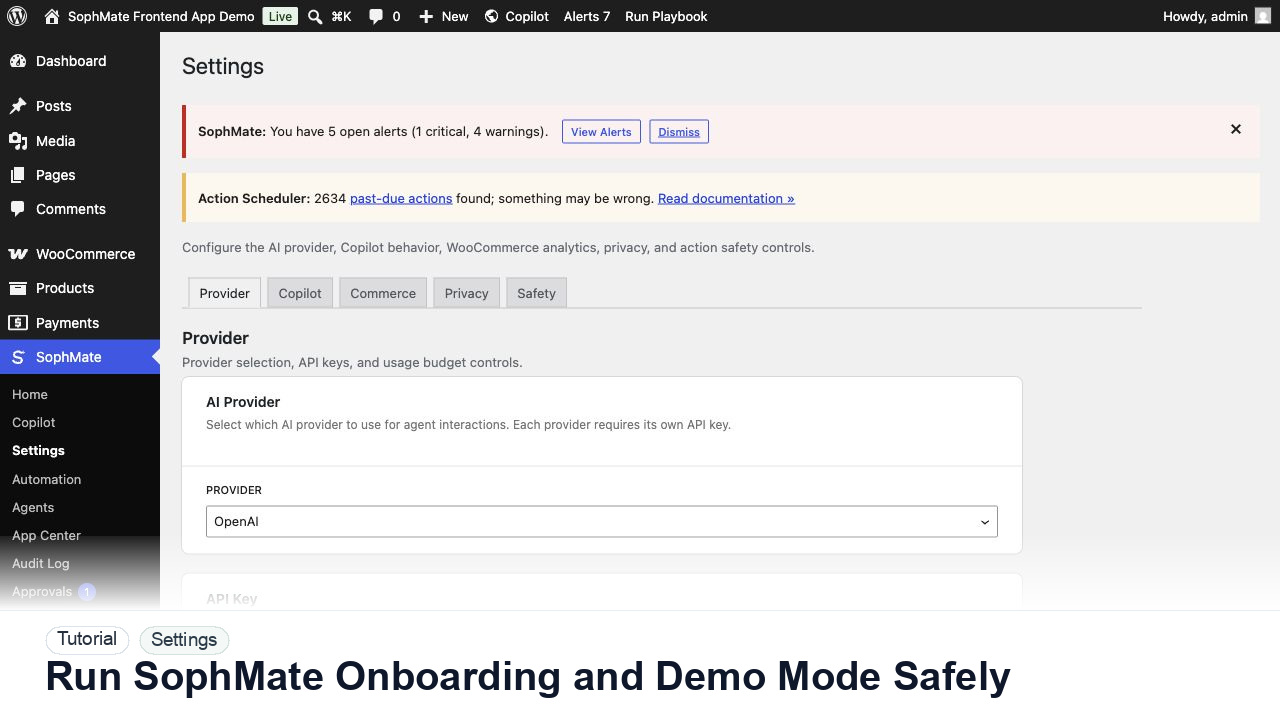
Use SophMate onboarding, sample data, and demo workflows to train operators without confusing test records with production work.