Configure Insights Goals, Custom Metrics, and Scheduled Reports
Set Insights goals, custom metrics, dashboard layout, scheduled reports, and AI summaries so WooCommerce reporting remains decision-support only.
Set Insights goals, custom metrics, dashboard layout, scheduled reports, and AI summaries so WooCommerce reporting remains decision-support only.
By the end of this tutorial, you will know how to use SophMate for SophMate Insights goals and reports while keeping the work reviewable inside WordPress.
A store manager wants weekly sales reports and custom KPI tracking without letting report summaries approve pricing, stock, or campaign changes.
Use this tutorial to evaluate whether SophMate keeps WooCommerce reporting reviewable rather than turning AI summaries into business authority. Reports should preserve date range, refund, discount, margin, attribution, export, and approval context.
Review these WooCommerce sales trends for decision support. Compare date range, refunds, discounts, margin context, attribution caveats, and recommend only reviewed next steps.
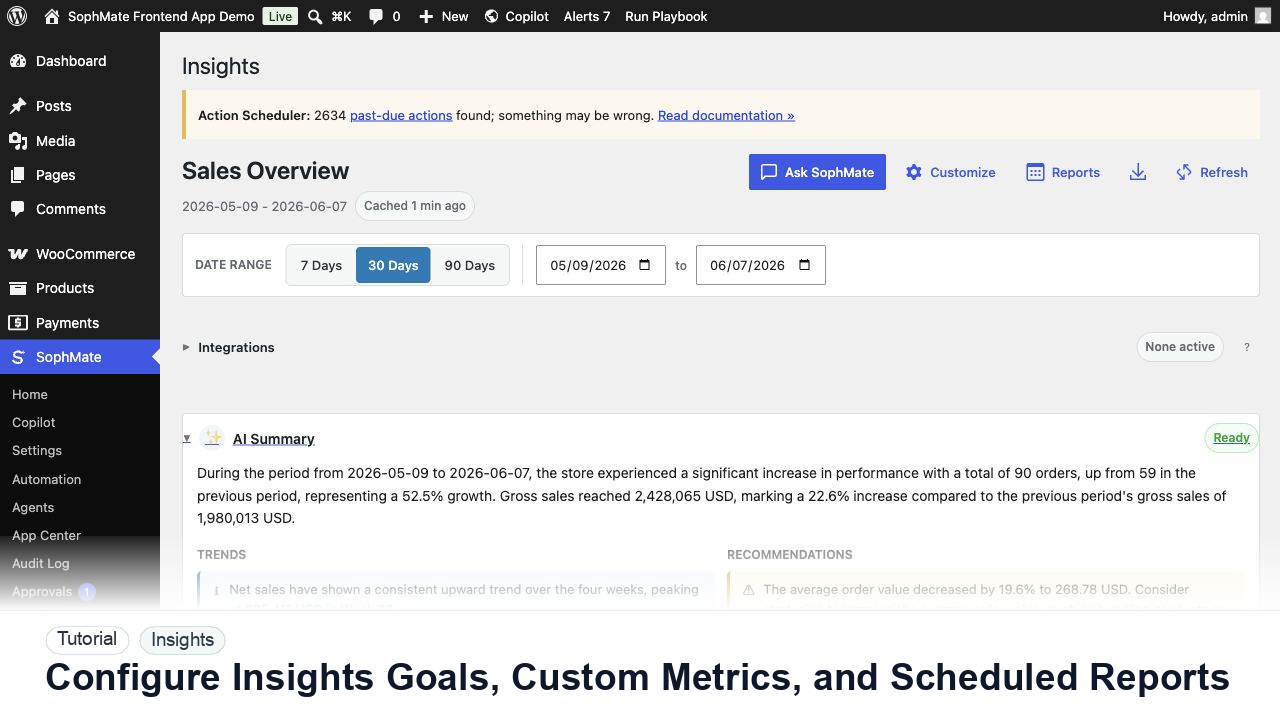
The tutorial image shows SophMate Insights context where sales trends, refunds, margin, goals, AI summaries, exports, and report schedules are reviewed before business decisions are made.
Treat AI summaries as decision support, not approval to change prices, coupons, stock, campaigns, customer segments, or financial reporting.
Define the decisions the dashboard should support, such as sales trend review, refund monitoring, campaign follow-up, or inventory planning.
Use goals and metrics that can be explained from WooCommerce data. Avoid vanity metrics that cannot guide an action or be audited later.
Save a layout that puts KPIs, timeseries, top products, customer signals, and AI summaries in the order operators actually review them.
Choose recipients, cadence, timezone, sections, and include-AI setting. Scheduled reports should go to people responsible for review.
When a report suggests coupon, pricing, product, or campaign work, move that recommendation into an approval path instead of acting from the report alone.
The reporting workflow is successful when the date range, refunds, margin context, attribution caveats, export evidence, and approval handoff are clear before any business action follows.
If report context is incomplete or misleading, stop any campaign, coupon, stock, pricing, or customer-impacting follow-up until the date range, source data, refunds, margin assumptions, and owner review are corrected.
Document report date range, timezone, comparison window, refund and discount context, attribution caveats, export location, summary owner, and any approved follow-up action.
The store owner, finance owner, or marketing lead should review reports before decisions. Use this workflow after campaigns, monthly reviews, seasonal spikes, or unusual refund and margin changes.
Escalate when reports drive pricing, stock, coupon, campaign, client billing, financial, or customer-impacting decisions and source data, attribution, refunds, or margin assumptions are unclear.
No. Insights is decision support for operators. Accounting, tax, margin close, and financial reporting should stay in the systems and review processes responsible for those records.
No. SophMate should make the work easier to draft, inspect, approve, and repeat. Human review remains necessary when output affects customers, money, published content, privacy, settings, or workflow execution.
Record the owner, input scope, access boundary, approval point, failure modes tested, evidence location, monitoring window, and rollback or stop path.
Use this report once as a decision review baseline. If it leads to a coupon, campaign, stock, pricing, or client-reporting decision, route that follow-up through the relevant approval or campaign workflow and keep the export attached to the decision record.
Next step
Review the SophMate listing for current package details, screenshots, compatibility notes, and license terms.
Related
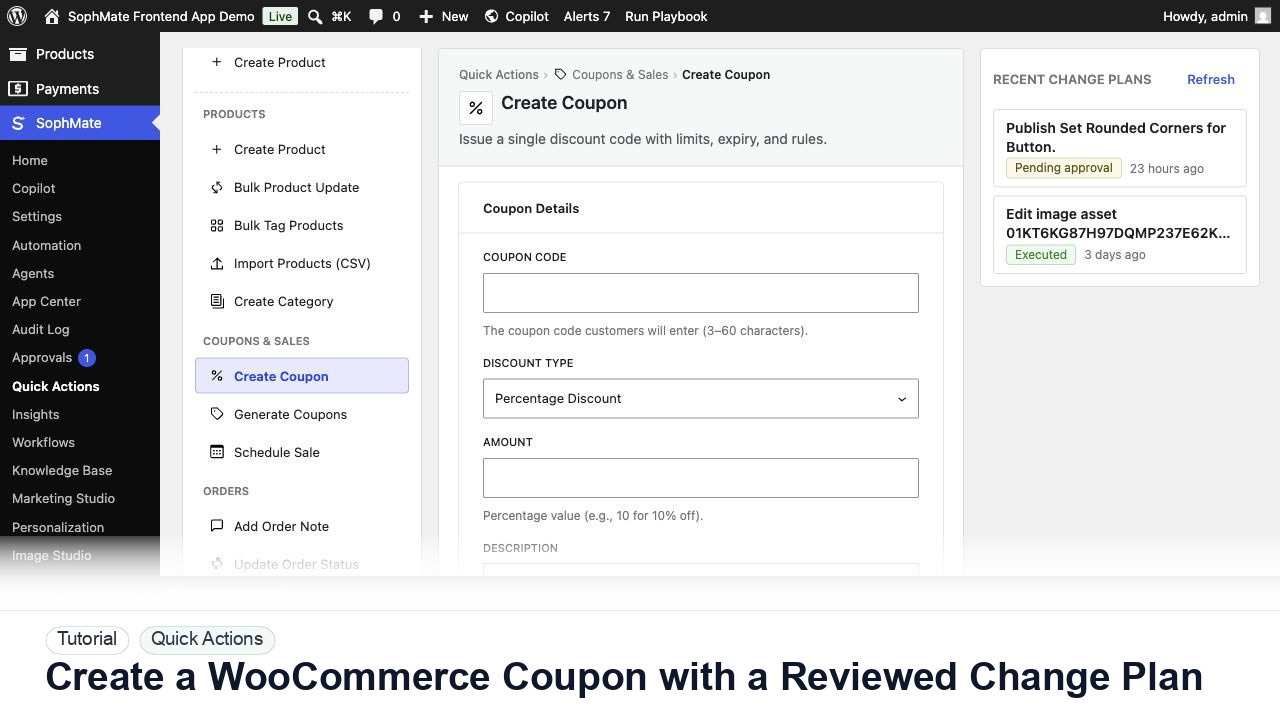
Create a WooCommerce coupon with SophMate, review the generated change plan, and apply the discount only after settings are confirmed.
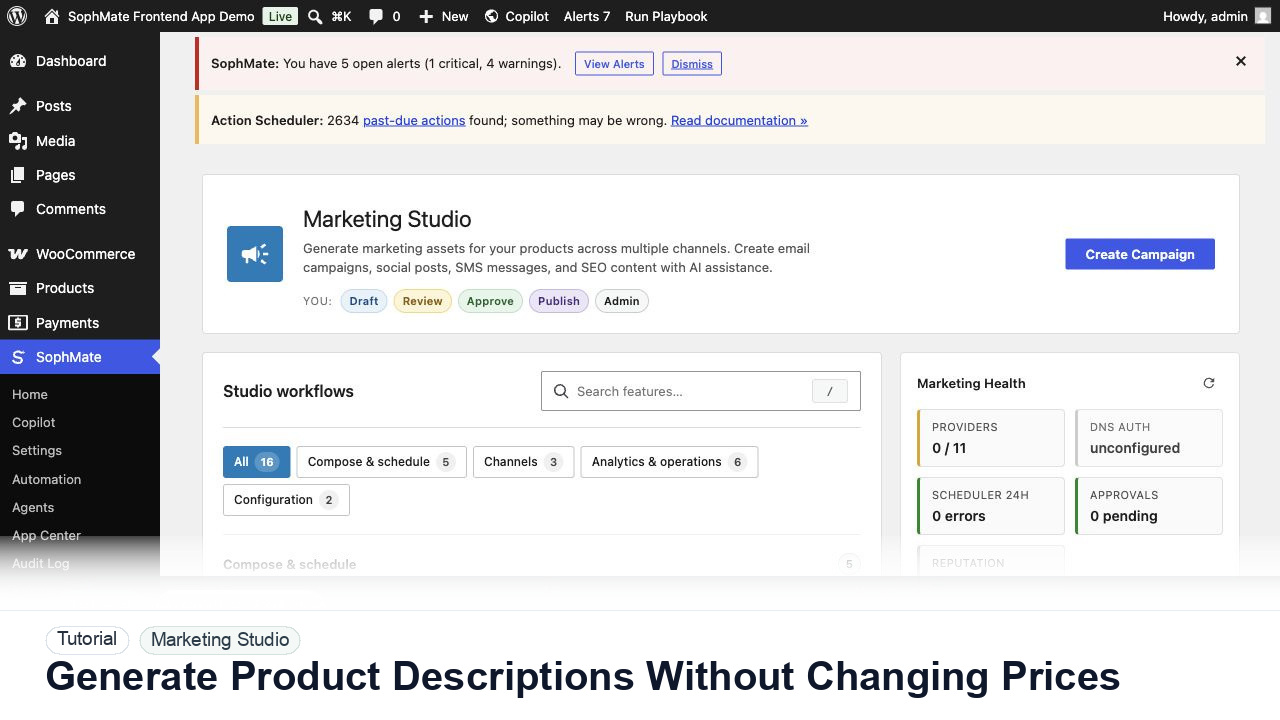
Use SophMate to draft product descriptions, SEO titles, and short descriptions while keeping price, stock, shipping, and variation settings out of scope.
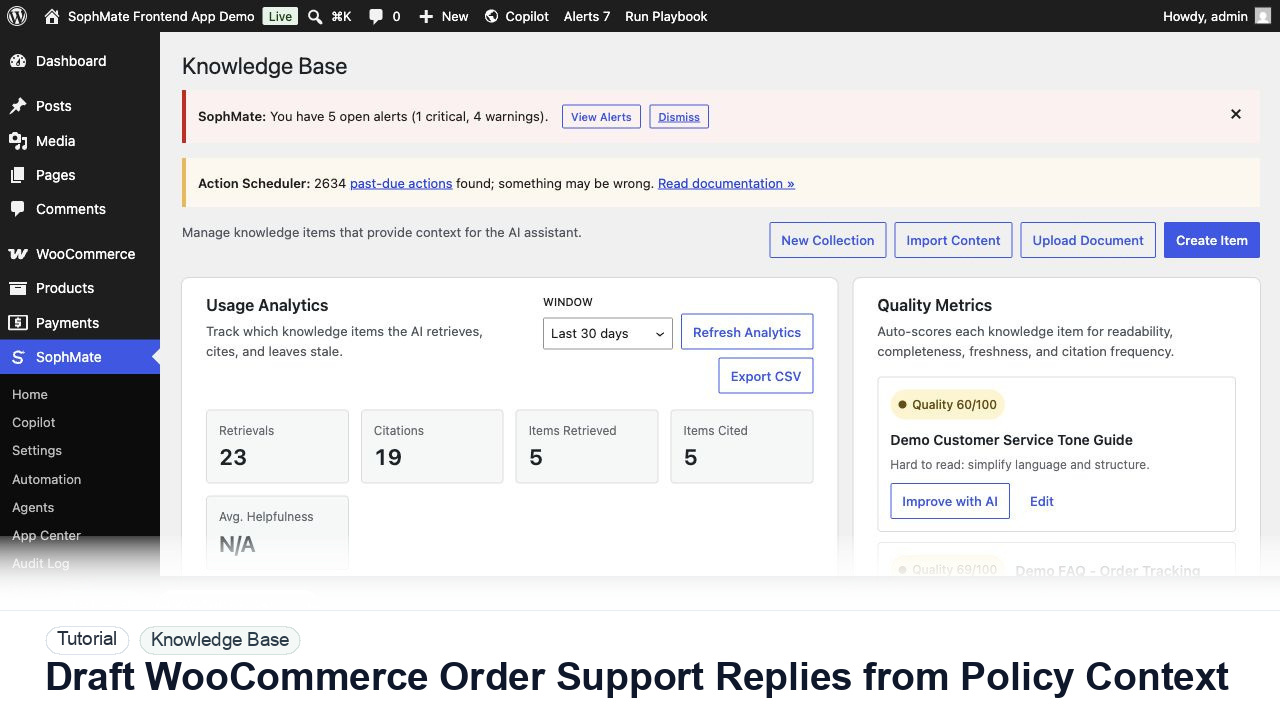
Draft WooCommerce order replies using order context, Knowledge Base policies, tone guides, and review controls before sending anything to a customer.