Use-case summary
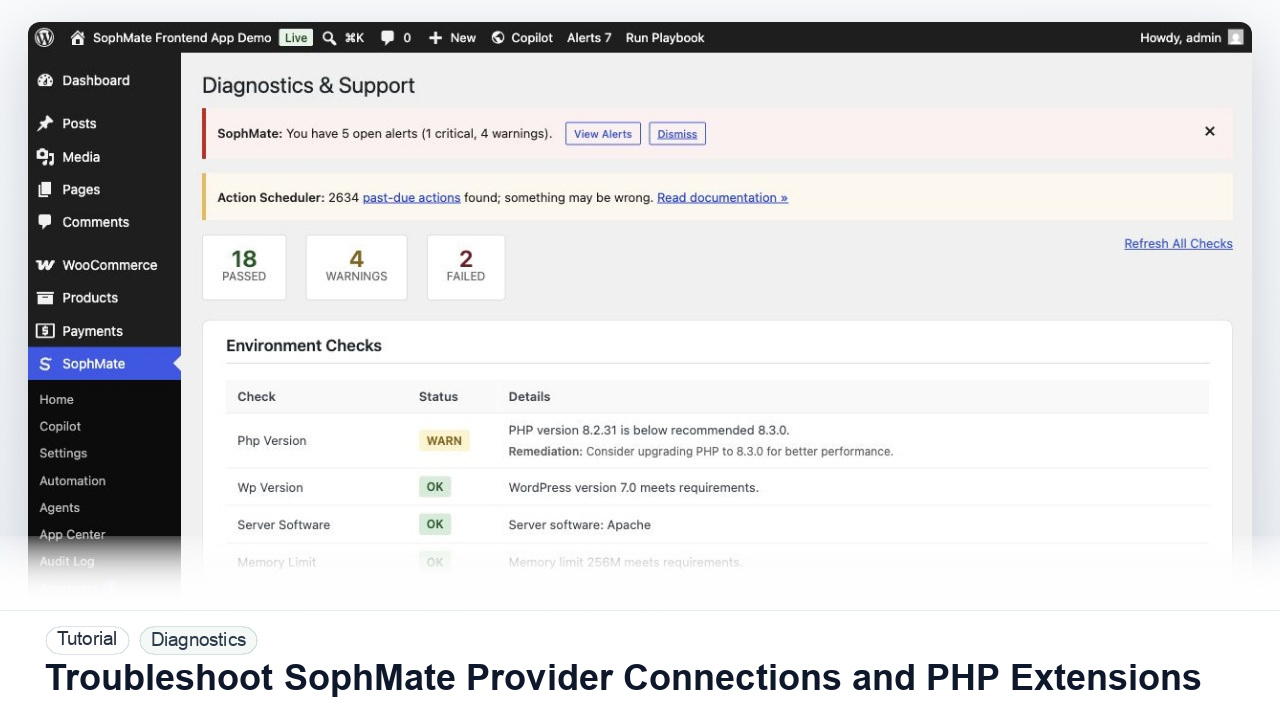
Use SophMate diagnostics, safe mode, regression watches, audit records, support bundles, and rollback evidence to triage AI-assisted production incidents.
This use case is for Incident response teams who need AI assistance inside WordPress but still need review, ownership, and traceability. SophMate is useful here because the work happens near the site data, WooCommerce context, policies, and operational controls rather than in a separate generic chat window.
Practical rollout
Start with a narrow workflow, write down the owner, run it manually once, then decide whether the pattern should become repeatable.
SophMate modules involved
- Diagnostics
- Provider Budget and Safe Mode
- Regression Rollback
- Audit Log
- Support Bundles
Recommended rollout
Start with one repeatable workflow that has a clear owner. Run it manually first, review the output, and only then decide whether it should become a playbook, watcher, workflow, or agent. Keep provider budgets, approval policy, and audit review in place before inviting a wider team.
Decision boundary
Keep the first version narrow, observable, and reversible. If the work changes customers, money, published content, or site settings, require an approval step.
First 30 days
Use the first month to prove one small workflow, collect review notes, and decide whether the pattern should scale.
Handoff model
Separate the person drafting the workflow from the person approving production impact.
Success criteria
- The workflow saves time without hiding decision-making.
- Changes that affect customers, store data, or published content are reviewed.
- The team can explain what SophMate used as context and where the final decision was recorded.
Related paths
Review the complete feature library, browse SophMate tutorials, compare alternatives in comparisons, and contact the team through support when a pre-sale or implementation question needs clarification.