Review Agent MCP Bindings, Memory, and Run Artifacts
Review SophMate agent MCP bindings, memory episodes, run artifacts, provider gateways, versions, and trigger scope before production agent work.
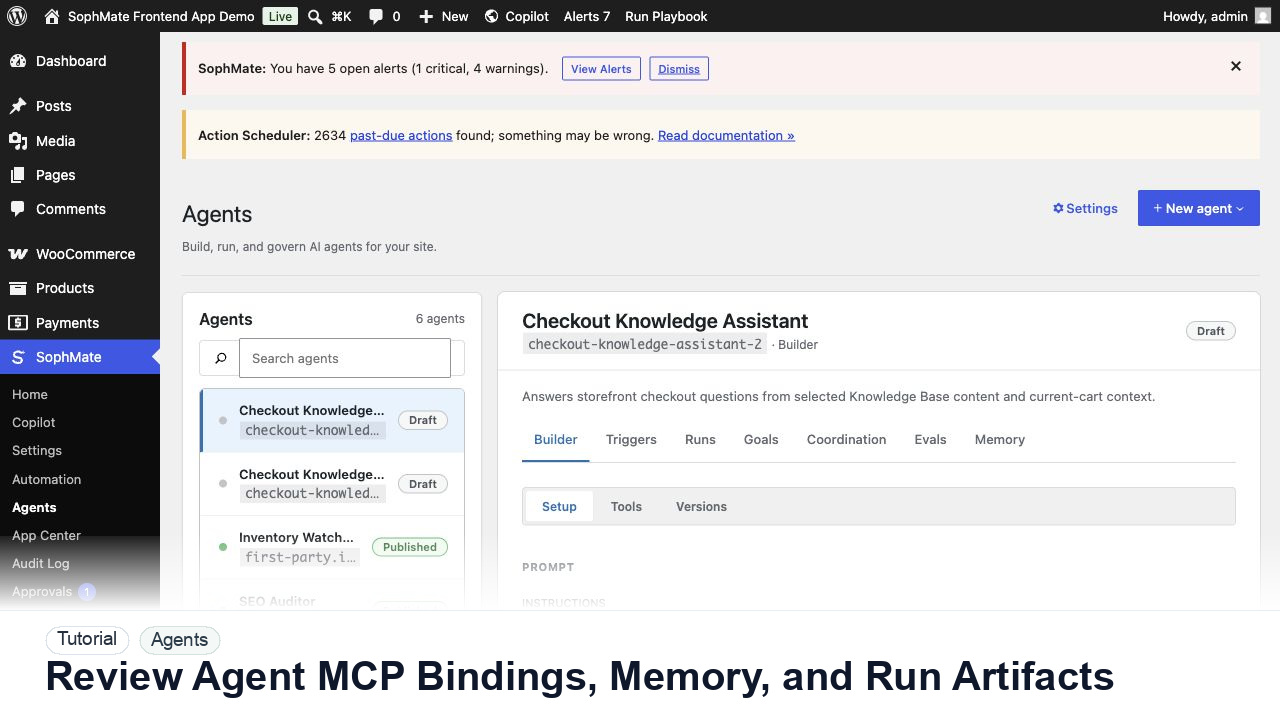
Review SophMate agent MCP bindings, memory episodes, run artifacts, provider gateways, versions, and trigger scope before production agent work.
By the end of this tutorial, you will know how to use SophMate for SophMate agent MCP bindings while keeping the work reviewable inside WordPress.
A developer adds a support agent that can use MCP tools and memory, so the team needs an evidence review before triggers are enabled.
Use this tutorial to evaluate whether SophMate agents are governed before they are powerful. Buyers should look for narrow purpose, allowed sources, tools, memory, refusal rules, eval cases, traces, and launch-surface review.
Review this agent before publishing. Confirm purpose, allowed sources, tools, memory, refusal rules, eval cases, launch surface, and trace review cadence.
The tutorial image shows Agents because agent quality depends on prompt scope, tools, triggers, runs, evals, memory, and trace review.
Keep agent scope narrow, bind only necessary tools and sources, and review run traces before publishing broadly.
Open the agent version, goal, allowed triggers, provider settings, memory policy, tools, and approval model before changing production access.
Confirm each MCP binding has a clear method, parameter shape, risk level, timeout, failure behavior, and audit output.
Check what the agent can remember, how memory is consolidated, whether private data is excluded, and how stale memories are removed.
Use artifacts and traces to understand inputs, tool calls, decisions, rejected paths, and final output before trusting the agent.
Start with a manual trigger or read-only workflow, then add scheduled, webhook, or commerce triggers only after review.
The agent workflow is successful when evals pass, traces show the agent staying within scope, and tool or Knowledge Base use is easy to review after real runs.
If traces show unsafe answers or tool misuse, unpublish or narrow the agent, remove risky tools, update evals, and retest before exposing it again.
Document agent purpose, allowed sources, allowed tools, refusal rules, eval cases, launch surface, and run trace review cadence.
The agent owner should review evals before launch and run traces after launch, especially when tools or customer-facing answers are involved.
Escalate when an agent needs broader tools, handles customer-impacting answers, fails evals, or produces traces that are hard to explain.
No. Bind only the sources, memory, tools, and launch surfaces needed for the agent purpose, then expand after evals, traces, refusals, and permission checks pass.
No. SophMate should make the work easier to draft, inspect, approve, and repeat. Human review remains necessary when output affects customers, money, published content, privacy, settings, or workflow execution.
Record the owner, input scope, access boundary, approval point, failure modes tested, evidence location, monitoring window, and rollback or stop path.
Run the agent against its eval set and first trace review, then publish only when failed cases, refusal behavior, tools, and sources are documented.
Next step
Review the SophMate listing for current package details, screenshots, compatibility notes, and license terms.
Related
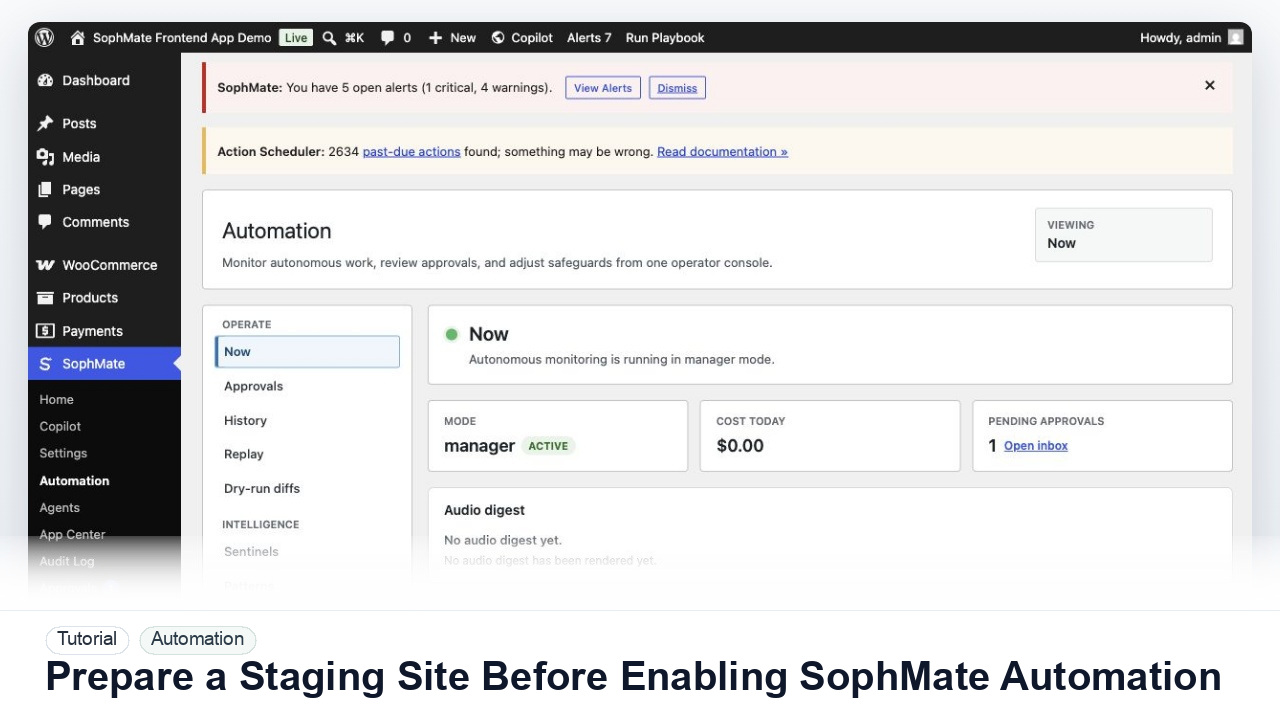
Use a staging WordPress site to test SophMate workflows, watchers, agents, approvals, and kill switches before production rollout.
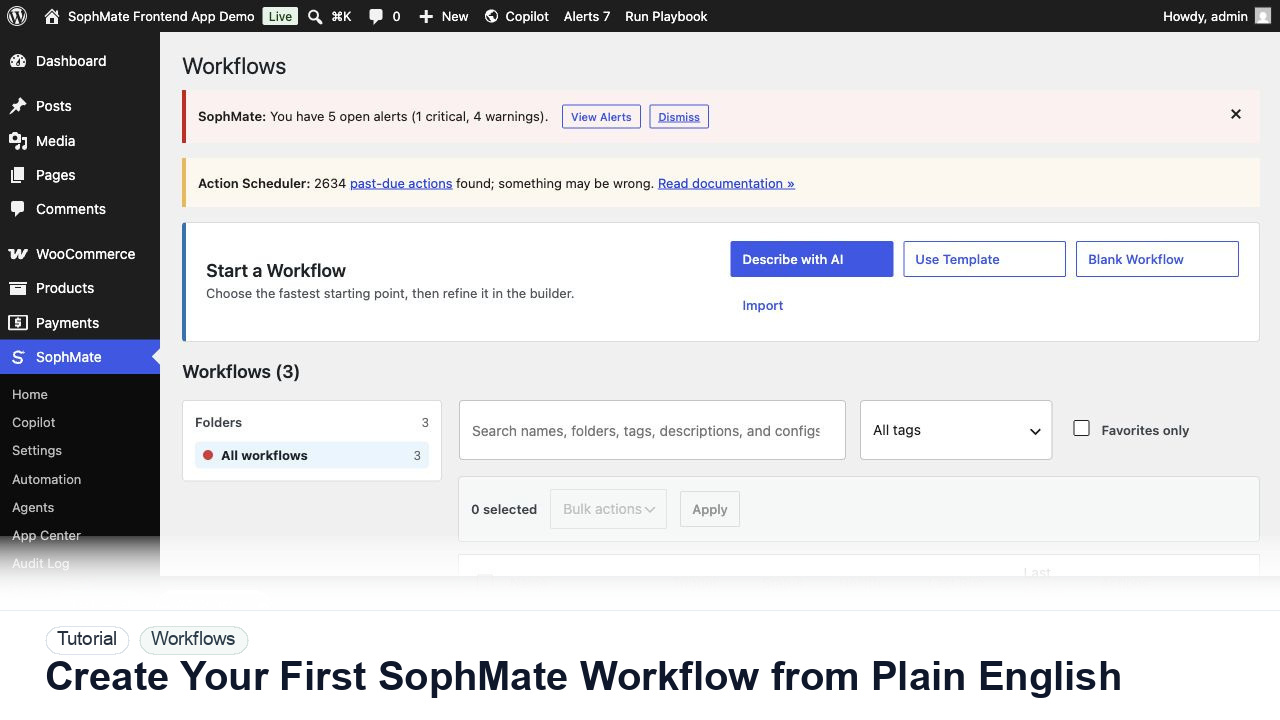
Use SophMate Workflows Describe with AI to turn a plain-English operations idea into a workflow draft with triggers, steps, and review notes.
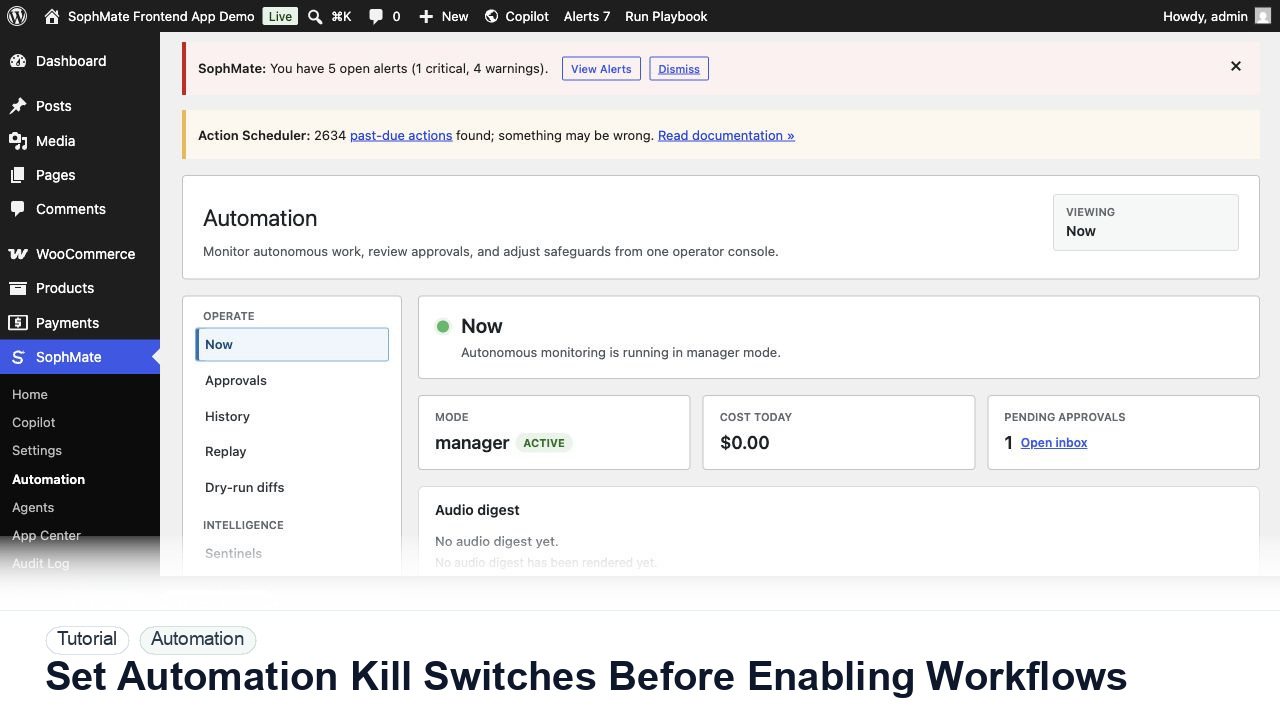
Configure SophMate workflow kill switches and ownership rules before enabling workflows that can affect WooCommerce or WordPress operations.