WooCommerce operations 6 min read May 15, 2026

How to Fix Product Copy Drift in WooCommerce

Use SophMate to fix WooCommerce product copy drift while preventing AI drafts from changing prices, stock, shipping, or visibility.
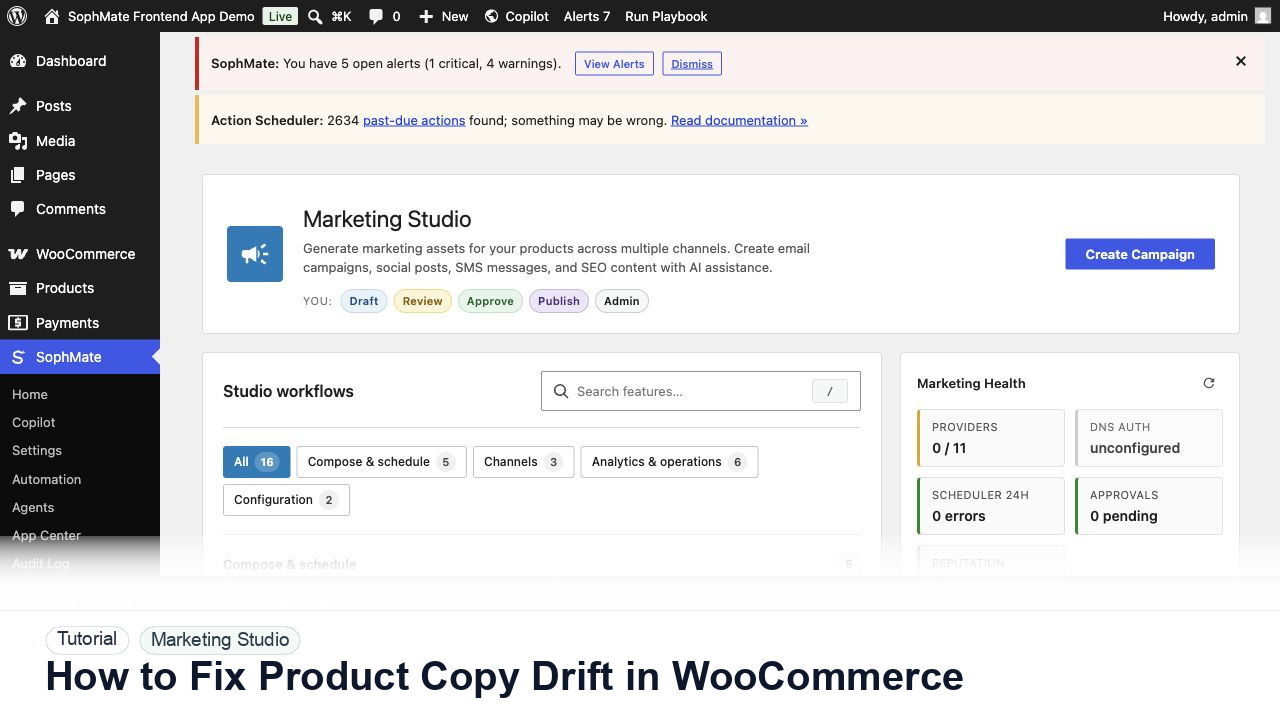
SophMate tutorial image for How to Fix Product Copy Drift in WooCommerce showing the related wp-admin workflow context.

Outcome

By the end of this tutorial, you will know how to use SophMate for fixing WooCommerce product copy drift while keeping the work reviewable inside WordPress.

Scenario

Product pages have been edited by multiple people over time, leaving inconsistent tone, outdated claims, and uneven SEO formatting.

WooCommerce pain point

WooCommerce product copy drift happens when multiple edits create inconsistent tone, outdated claims, and uneven SEO formatting. The limitation is that copy quality work must stay separate from revenue-impacting product fields.

SophMate resolution path

  • Ask SophMate to compare selected product pages for drift patterns.
  • Lock commercial fields out before generating rewrite options.
  • Use a preview table and small approval batch before expanding the cleanup.

What to avoid in WooCommerce

  • Do not let copy cleanup change price, stock, SKU, shipping, visibility, tax, or variations.
  • Do not approve product claims without a qualified reviewer.
  • Do not expand batch publishing until real product pages are checked.

Buyer evaluation note

Use this tutorial to evaluate whether SophMate can help marketing teams draft faster without bypassing launch controls. The workflow should preserve product facts, offer rules, audience limits, inventory risk, claims review, and channel ownership.

When not to use this workflow

  • Do not use Marketing Studio to publish offers before inventory, eligibility, claims, channel health, and approval ownership are verified.
  • Do not reuse one campaign brief across audiences when offer terms or customer promises differ.
  • Do not use this workflow to bypass the normal owner, reviewer, or approval path for production changes.
  • Defer the workflow when the source data, permission boundary, rollback owner, or customer impact cannot be explained.

Example operator request

Prepare a campaign draft from these product facts, offer rules, audience, channel constraints, inventory limits, and approval owner. Do not schedule or publish until review passes.

What the image shows

The tutorial image shows Marketing Studio context where campaign planning, channel health, product signals, and review steps sit together.

Before you begin

  • Confirm campaign goal, product scope, offer rules, eligibility, inventory risk, channel constraints, sender health, and approval owner before drafting.
  • Separate copy generation from scheduling or publishing so launch decisions remain reviewable.
  • Confirm SophMate is active, diagnostics do not show blocking failures, and the current user role can open the relevant SophMate module.
  • Check provider, budget, privacy, and approval settings before asking SophMate to draft or execute work.
  • Keep customer data, API keys, purchase codes, and private credentials out of prompts unless this workflow explicitly requires and permits that context.

Access and data boundary

  • Use approved product facts, audience definitions, offer rules, channel constraints, and campaign goals.
  • Do not include raw customer lists, unsupported claims, private discount strategy, or unapproved legal/policy wording in reusable briefs.
  • Use the least-privileged SophMate role that can complete the review, and keep administrator-only access limited to setup, provider, billing, diagnostics, and high-risk approval work.
  • Prefer record IDs, short excerpts, and redacted screenshots over full customer records, payment details, provider keys, purchase codes, or raw server logs.

Guardrail

Review product availability, offer terms, channel health, and approval status before publishing or scheduling campaign material.

Common mistakes to avoid

  • Drafting campaign copy before confirming inventory, offer limits, launch date, and channel health.
  • Publishing variants without checking approval status and customer-facing promises.
  • Reusing one campaign brief for every audience or product category.

Step 1: Find the drift pattern

Ask SophMate to compare selected product descriptions for tone, missing facts, outdated claims, inconsistent formatting, and SEO metadata gaps.

Step 2: Lock commercial fields out

Set a strict boundary that price, stock, SKU, shipping, visibility, tax, and variation data must not change during copy cleanup.

Step 3: Generate rewrite options

Ask for revised descriptions, short descriptions, SEO titles, and meta descriptions in a preview table before creating any action plan.

Step 4: Review claims and formatting

Have a human check regulated claims, dimensions, materials, compatibility, warranty language, and brand voice before approval.

Step 5: Publish a controlled batch

Use an approval plan for a small product group, verify storefront formatting, then expand only when the result is stable.

Review checklist

  • Commercial fields remain unchanged.
  • Claims are reviewed before publishing.
  • The first batch is verified on real product pages.

Production readiness

  • Confirm offer terms, inventory, channel health, sender authentication, audience, approval owner, and launch window before publishing campaign material.
  • Separate draft generation from scheduling or customer-facing sends.
  • Run the workflow first on a narrow, low-risk record or page before expanding scope.
  • Confirm the reviewer, approval rule, and evidence location before any production-changing action runs.

Failure modes to test

  • Test unavailable inventory, invalid offer rules, unsupported claims, deliverability warnings, missing approval, and wrong audience assumptions.
  • Confirm campaign drafts do not publish or schedule when any commercial precondition fails.
  • Test the path where the user lacks permission, required context is missing, or the reviewer rejects the result.
  • Confirm the failed state leaves an audit record, visible owner, and clear next action instead of a silent or ambiguous outcome.

Success signal

The campaign workflow is successful when product context, offer terms, channel health, creative assets, and approval status are all visible before publishing.

Post-run monitoring

  • Monitor campaign draft revisions, approval delays, deliverability warnings, inventory constraints, and claim corrections.
  • Compare generated variants against final approved copy before reusing the campaign pattern.
  • Review the audit log, diagnostics, and affected WordPress records shortly after the first run.
  • Record any confusing output, missing source context, permission issue, cost spike, or reviewer correction before repeating the workflow.

Safe expansion criteria

  • Offer rules, deliverability, inventory, claims, audience, and approval ownership are stable.
  • Final approved campaign copy can be traced back to source context and reviewer changes.
  • The first run has a documented owner, evidence, review result, and stop path.
  • A second operator can repeat the workflow from the notes without relying on hidden context.

Rollback or stop path

If campaign terms, deliverability, claims, or inventory are wrong, stop publishing, keep drafts unscheduled, and route the brief back through campaign approval.

What to document

Document campaign goal, products, audience, offer rules, channel health, generated variants, approval owner, and launch decision.

Owner and cadence

A marketing owner should review each campaign before launch and compare results after the campaign window closes.

Escalate when

Escalate when campaign copy touches regulated claims, aggressive discounts, inventory risk, deliverability problems, or customer promises.

Common questions

Can Marketing Studio schedule campaigns automatically?

Only after offer rules, inventory, channel health, sender authentication, claims, and approval ownership are confirmed. Drafting and scheduling should stay separate until launch review passes.

Does this workflow remove the need for human review?

No. SophMate should make the work easier to draft, inspect, approve, and repeat. Human review remains necessary when output affects customers, money, published content, privacy, settings, or workflow execution.

What should be documented before expanding the workflow?

Record the owner, input scope, access boundary, approval point, failure modes tested, evidence location, monitoring window, and rollback or stop path.

Next action

Move one approved draft into the right channel as a draft, not a send, and attach offer rules, inventory caveats, and reviewer notes to the campaign record.

Next step

Bring this workflow into your WordPress site

Review the SophMate listing for current package details, screenshots, compatibility notes, and license terms.

View on CodeCanyon

Related

More from WooCommerce operations

Pro